Roof Maintenance Checklist for Southern California Homes
A practical roof maintenance checklist for Southern California homes in Whittier CA - seasonal tasks, costs, warning signs, and when to call a pro.
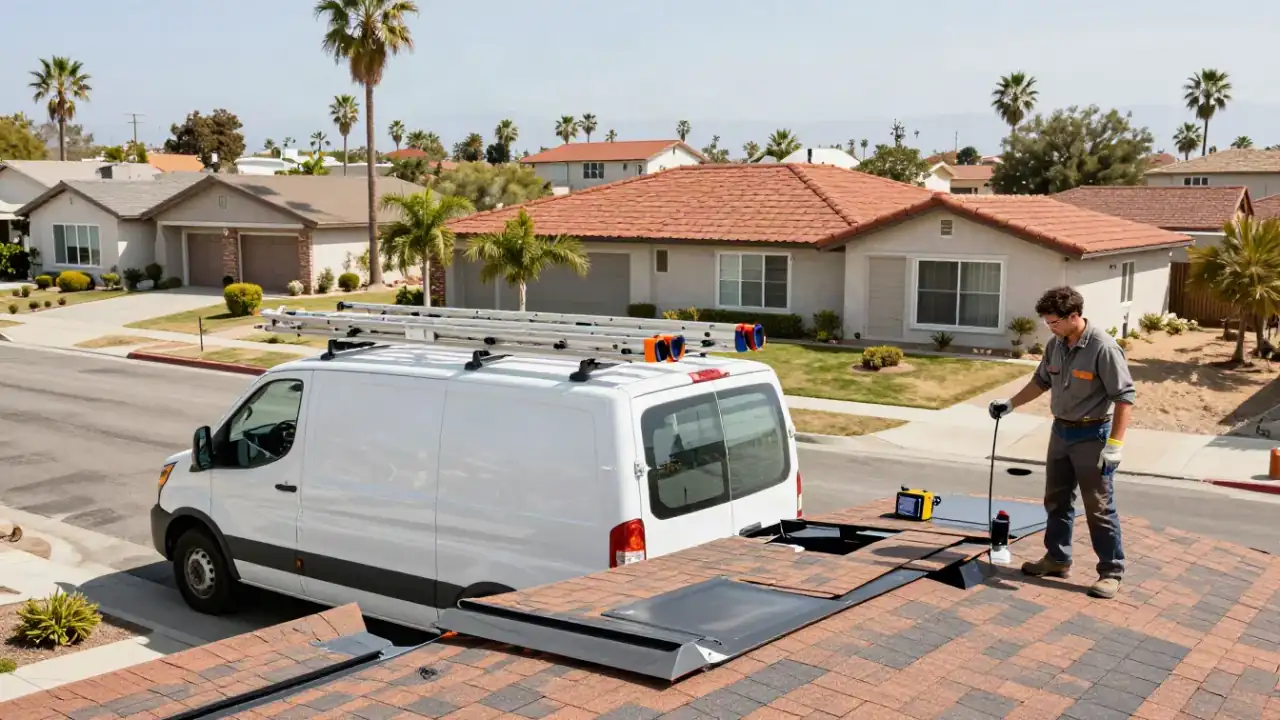
A roof maintenance checklist for Southern California homes in Whittier CA comes down to six recurring tasks: clear debris from valleys and drains, inspect flashing and pipe boots, check tile or shingle condition, seal penetrations, look for ceiling stains after rain, and schedule a professional inspection once a year. If you do those six things, you will catch most leaks before they reach your drywall. This post walks through each item, the seasonal timing that matters here, and what it costs in 2026.
We are Roof Leak Repair Whittier CA, and we have climbed enough Whittier roofs to know that the failures we see are almost never random. They follow patterns - sun-baked flashing, cracked pipe boots, debris-packed valleys, and tile that has shifted after a hot summer.
What Is on a Roof Maintenance Checklist in Whittier CA?
A roof maintenance checklist Whittier CA homeowners can actually use is short, physical, and repeatable. Roof maintenance is the set of inspections and small repairs that keep water out of your house and extend the life of the roof you already paid for.
Here is the core list we run on every roof:
- Clear debris from valleys, gutters, and around any roof drain. Whittier's sycamores, eucalyptus, and pine drop enough material to dam water in a single season.
- Inspect flashing at walls, chimneys, and skylights. This is where most leaks start.
- Check pipe boots and vents for cracked rubber collars. A 10-year-old boot is on borrowed time.
- Look at tile, shingle, or membrane surfaces for cracks, missing pieces, lifted edges, and granule loss.
- Seal penetrations with the right roof-compatible sealant, not whatever is in the garage.
- Check the attic and ceilings after the first real rain for stains, damp insulation, or daylight.
Do these six and you have covered 90% of what causes water intrusion on Whittier homes. The remaining 10% is the stuff that needs a ladder, a hose test, and someone who knows what a failing underlayment looks like from six inches away.
How Often Should You Do Roof Maintenance in Whittier California?
Twice a year is the right cadence for most Whittier homes: once in late September or October before the rainy season, and once in April or May after it. Add a quick visual check after any Santa Ana wind event or a storm that drops more than an inch in a day.
Why twice? Because Whittier gets the worst of both worlds. We bake roofs from June through September with surface temps that hit 140°F or higher on dark tile and shingle. Then from November through March we get the rain - often 12 to 15 inches in a normal year, sometimes in just a handful of storms.
That heat-then-water cycle is what kills roofs here. Sealants dry out and crack in the summer, and the first big storm finds every one of those cracks. If you only do one inspection a year, make it the fall one. If your roof is over 15 years old, or you have had a leak before, do both.
Homeowners in the older pockets of town - the 1920s to 1950s stock around Roof Leak Repair in Uptown Whittier - should lean toward the twice-a-year schedule. Those roofs have been patched, re-patched, and layered over the decades, and small failures show up faster.
Fall and Winter Checklist: Before the Rain Arrives
Your fall inspection is the one that matters most in Whittier. Do it in October, before the first real storm, and you are fixing problems on a dry roof instead of chasing them in the rain.
Clear the water paths
Get the leaves, seed pods, and pine needles out of every valley, gutter, and roof drain. On flat or low-slope sections - common on Whittier additions, garages, and commercial-adjacent homes - standing water is the number one cause of premature membrane failure. If water is still sitting 48 hours after a storm, the slope or the drain is wrong.
Check flashing, boots, and penetrations
Run a hand along the flashing at every wall, chimney, and skylight. Look for lifted edges, rusted nails, cracked caulk lines, and gaps you can slide a putty knife into. Check every pipe boot for a rubber collar that has gone hard or split. This is the single most common leak source we find on Whittier roofs, and it is also the cheapest to fix.
If the flashing itself is failing rather than the sealant, that is a real repair. Our Flashing Repair Whittier CA work covers wall flashing, counter-flashing, step flashing, and the chimney and skylight transitions that leak most often.
Test before the storm
Have someone run a hose on the roof for 15 to 20 minutes while you watch from the attic. You will find the leak on a dry afternoon instead of at 10 p.m. during a downpour. If you see a stain spreading on a ceiling, that is worth investigating properly - our Ceiling Water Stain and Moisture Investigation Whittier CA service traces the stain back to the actual entry point rather than patching the drywall and hoping.
Spring and Summer Checklist: Heat, Sun, and Dry Rot
Your spring inspection is about what winter left behind and what summer is about to do. Do it in April or May, once the rain has stopped and the roof is dry.
Look for winter damage
Walk the roof and check for lifted or missing shingles, cracked tile, displaced ridge caps, and any flashing that moved. Winter storms in Whittier do not usually bring snow, but wind-driven rain and 40 mph gusts will lift shingle tabs and shift tile.
If you have a tile roof, this is the time to check for cracked or slipped tiles and to look at the underlayment. Tile roofs in Whittier routinely last 40 to 50 years on the tile but only 20 to 25 years on the underlayment underneath. When the underlayment goes, the tile still looks fine and the roof still leaks. That is a Tile Roof Repair Whittier CA job, and it is one of the most common calls we get from homeowners who cannot figure out why a 30-year-old tile roof is dripping.
Protect against the summer bake
Check sealant at every penetration. Summer heat will finish off anything already cracking. On flat or low-slope roofs, look for blisters, alligatoring, and seams pulling apart. A reflective coating applied before the worst heat can drop surface temperature significantly and add years to a membrane - that is what our Roof Coating and Sealing Whittier CA service is for.
Check the attic
Look for daylight coming through the roof deck, damp or matted insulation, and any sign of pests. Attic ventilation matters more than most homeowners realize - a hot, poorly vented attic cooks the underside of your roof deck all summer.
What Roof Maintenance Is Needed in Southern California
Southern California roof maintenance is different from what you would do in a wet or cold climate. We do not deal with ice dams or freeze-thaw cycles. We deal with UV, heat, wind-driven rain, and dry rot.
The four things that matter most here:
- UV degradation. Sun breaks down sealants, rubber boots, and asphalt binders. Anything rubber or caulk-based on your roof has a shorter life here than the manufacturer's general estimate.
- Thermal movement. Roofs expand and contract daily. That movement works fasteners loose and opens seams over time.
- Wind-driven rain. Our storms push water sideways and upward. That is why flashing and vertical transitions leak more than flat field areas.
- Dry rot. Once water gets into fascia, sheathing, or eaves, wood decay moves fast in our climate. Catching it early is the difference between a small repair and a framing job.
If you live near the hills - Friendly Hills, Spy Glass Hill, Rose Hills - you also get more wind exposure and more debris from the surrounding vegetation. Homeowners there tend to need the fall cleanup more urgently than folks on flatter streets. We handle a lot of Roof Leak Repair in Friendly Hills calls in the first two weeks after the season's first big storm, and almost all of them trace back to debris or flashing.
Common Mistakes Whittier Homeowners Make
The mistakes we see on Whittier roofs are consistent, and most of them make a small problem bigger.
- Patching with the wrong sealant. Hardware-store caulk on a roof that hits 140°F will fail within a season. Roofing sealants are formulated for the surface and the temperature range.
- Walking a tile roof. Tile cracks underfoot. One wrong step creates a leak that did not exist before.
- Ignoring a ceiling stain. A stain is the end of the leak, not the start. By the time water shows on your ceiling, it has usually been traveling for weeks.
- Pressure-washing the roof. It strips granules off shingles and drives water under tile and flashing. Do not do it.
- Skipping the fall inspection. The most expensive roof repairs we do are the ones that start as a $300 flashing fix in October and become a $4,000 drywall-and-framing job in February.
- Letting debris sit in valleys. A dammed valley holds water against your underlayment for days. That is how a roof that should last 25 years fails at 15.
None of these are exotic. They are just the things that get skipped when life is busy and the roof is out of sight.
When to Call a Professional
Call a professional when you cannot safely get on the roof, when you have already patched the same spot twice, or when you see water inside the house. Those three situations cover almost every case where a DIY fix costs more than it saves.
We also get called for the leaks that hide. A stain on a ceiling, a musty smell in a closet, or a soft spot in the eaves usually means water has been moving for a while. Our team finds the entry point, fixes it, and tests it with water before we leave. If you have a leak you cannot pin down, that is exactly the kind of job we do.
If you are searching for Roof Leak Repair in North Whittier or anywhere else in the city, we cover the whole area. One visit, one clear price, and a roof that is dry when we walk away.
Frequently Asked Questions
What is on a roof maintenance checklist in Whittier CA?
Six items: clear debris from valleys and drains, inspect flashing at walls and chimneys, check pipe boots and vents, look at tile or shingle condition, seal penetrations, and check the attic and ceilings after rain. That covers the vast majority of leak causes on Whittier homes.
How often should I do roof maintenance in Whittier California?
Twice a year - once in October before the rainy season and once in April or May after it. Add a quick visual check after any Santa Ana wind event or storm that drops more than an inch of rain in a day.
What roof maintenance is needed in Southern California?
Focus on UV protection, flashing and pipe boot condition, debris removal, and dry rot checks. Our climate breaks down sealants and rubber faster than colder regions, and wind-driven rain finds every gap in flashing and vertical transitions.
Who offers roof maintenance near me in Whittier CA?
We do. Whittier Roof Leak Repair handles inspections, maintenance, and leak repair across Whittier and the surrounding areas. Call (562) 443-3829 to schedule a visit.
How much does roof maintenance cost in Whittier in 2026?
A basic inspection and tune-up typically runs $250 to $500 in 2026, depending on roof size, pitch, and how much debris and sealing work is needed. Small repairs like a pipe boot or flashing reseal usually add $150 to $400.
Get Help with Roof Leak Repair in Whittier
If your roof is due for its fall inspection, or you have already spotted a stain, a drip, or a soft spot, we can take a look and tell you exactly what it needs. Call Whittier Roof Leak Repair at (562) 443-3829 and we will get you on the schedule.