Stain keeps returning after being painted over
We trace the moisture to its source with a meter and thermal camera, repair the failed pipe boot or flashing, then let the area dry before you repaint. The stain stays gone because the water stopped.
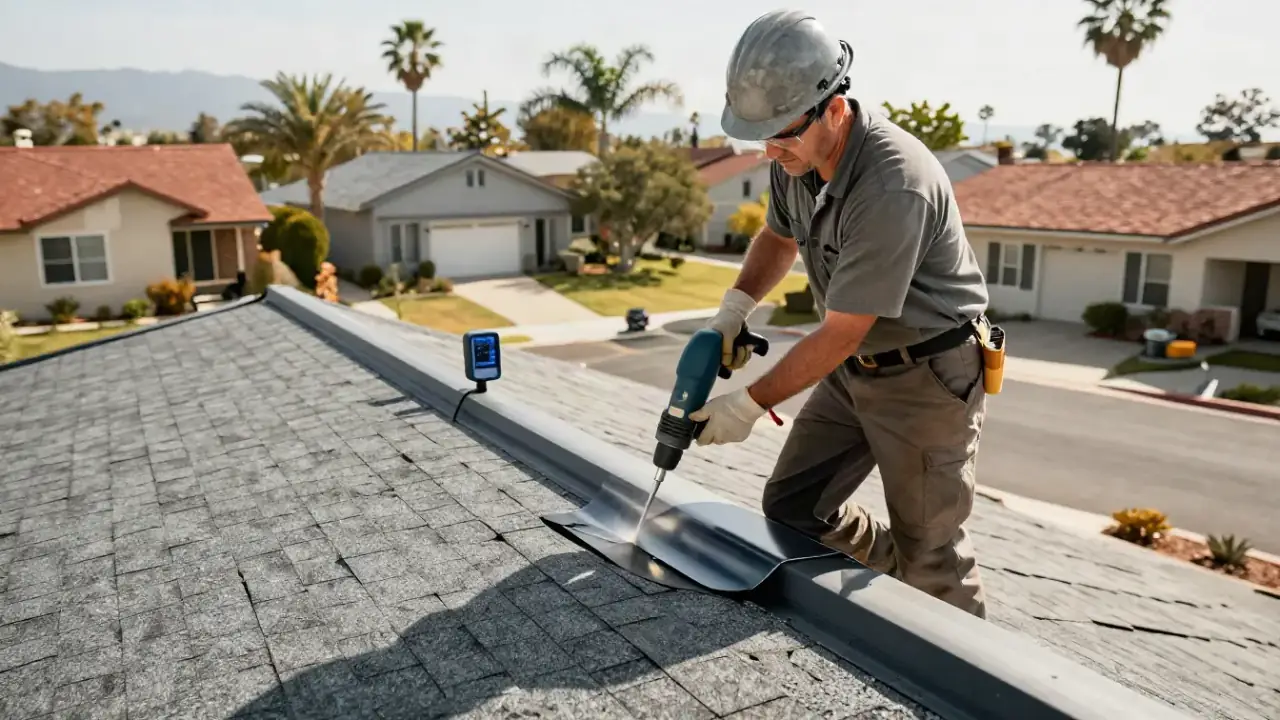
Ceiling Water Stain and Moisture Investigation Whittier CA starts with finding the actual source, not painting over the symptom. We trace moisture with meters and thermal imaging, then repair the flashing, pipe boot, or underlayment that failed. If you have a brown ring spreading across your ceiling, call (562) 443-3829 and we will schedule ceiling leak detection in Whittier today.
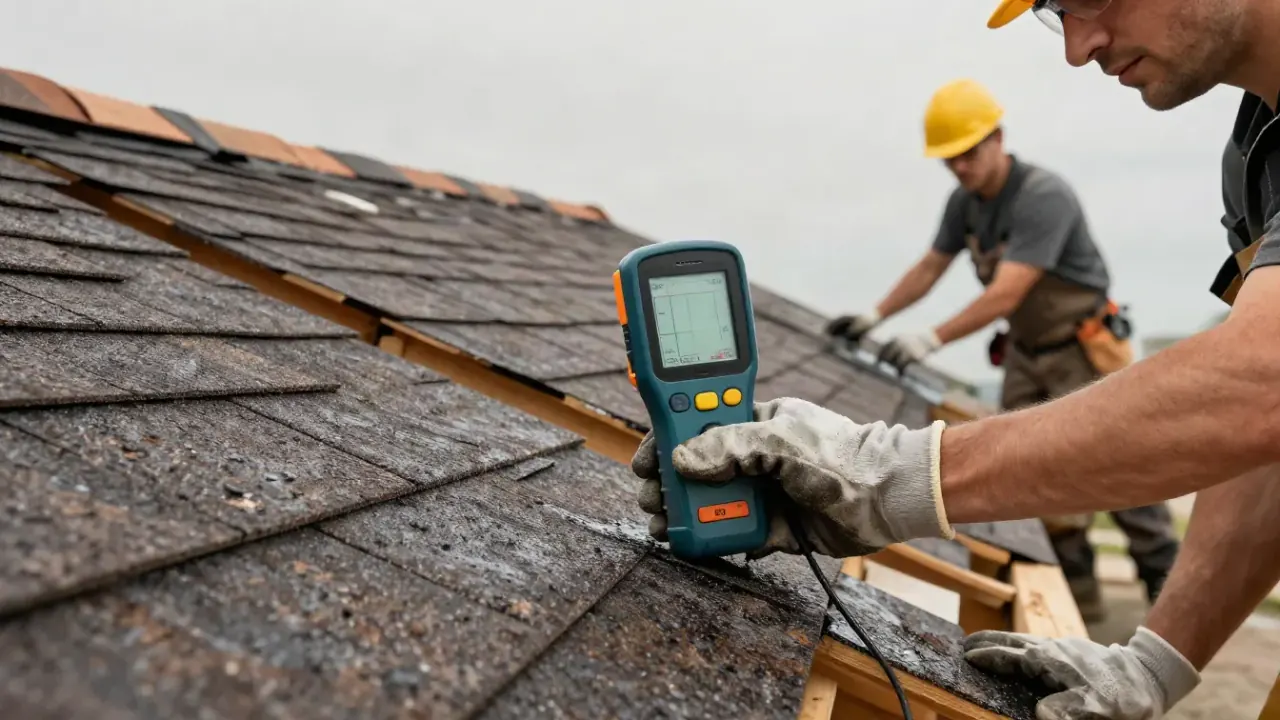
Ceiling Water Stain and Moisture Investigation Whittier CA is a diagnostic service that traces the origin of a ceiling stain back to its roof or plumbing source before any repair begins. Water travels along rafters, underlayment, and sheathing, so the stain on your ceiling is rarely directly below the failure. We use a moisture meter and infrared thermal camera to map the path, then confirm the entry point with a controlled hose test.
Whittier homes see this constantly after winter storms and summer heat cycles. Tile underlayment dries out, pipe boot seals crack, and flashing pulls away from chimney walls. A homeowner in Uptown Whittier might notice a stain three feet from the actual pipe boot leak. That is why moisture investigation in Whittier California matters: we locate the real failure instead of guessing and replacing materials that were never the problem.
The base investigation covers the full diagnostic: interior scan, roof inspection, water test, and a written finding with photos. Repairs are quoted separately once we know the source. Most customers approve the repair on the same visit.
Moisture meter readings on the ceiling, walls, and attic framing, plus an infrared thermal camera scan to map the wet zone. This tells us how far the water has traveled from the entry point.
We check pipe boots, flashing, skylight seals, valleys, chimney counter-flashing, and underlayment. On steep or fragile tile, a drone handles the sections that are unsafe to walk.
We run water on the suspect area in stages while watching the meter inside. When the reading climbs, the source is confirmed. No guessing, no replacing parts that are still good.
You get photos of the failed component and the moisture readings. This is what insurance adjusters want to see on storm damage claims, and it protects you if the issue ever returns.
We explain what failed, what it takes to fix it, and the price before any repair starts. If the fix is simple, we often complete it the same visit with materials already on the truck.
You describe the stain: location, size, when it appeared, and whether it grows after rain. We ask about the roof type and any recent storms. This takes five minutes and tells us whether to bring ladder access for tile or shingle, and whether a second technician is needed for a two-story home.
We start inside. A moisture meter reads the ceiling drywall and the framing above it. The infrared thermal camera shows temperature differences that reveal wet insulation and hidden moisture trails. This step usually takes 20 to 30 minutes and tells us which roof section to inspect first.
On the roof, we check the likely suspects in order: pipe boots, flashing, skylight seals, valleys, and chimney counter-flashing. We look for cracked sealant, lifted shingles, and tile underlayment failure. A drone handles steep or fragile sections where walking would risk the tile.
We run a hose on the suspect area in controlled stages while a second technician watches the moisture meter inside. When the reading climbs, we have our source. This confirmation step is what separates a real investigation from a visual guess.
We show you the photos, explain what failed, and give you the repair cost before we start. Most repairs are same-day. If the fix needs a specialty material like a skylight seal kit or Grace underlayment, we schedule the return visit and tell you the exact date.
Purpose-built equipment, used by trained technicians — so the job is done accurately the first time.
Reads the water content in drywall, sheathing, and framing. It tells us how far the moisture has spread from the visible stain and whether the wood is still wet after a repair.
Shows temperature differences that reveal hidden wet zones behind drywall and under insulation. It finds the water trail even when the surface feels dry to the touch.
Captures high-resolution images of steep tile and two-story roofs without risking a technician's footing. We use it on fragile tile where walking causes more damage than it finds.
Simulates rain on a specific roof section in controlled stages. While one technician runs water, another watches the moisture meter inside for the reading to climb.
Reshapes metal counter-flashing at chimneys and walls, and applies Sika or Tremco sealant in a clean, uniform bead that bonds to the surface.
Gets us safe roof access and lets us lift tile or shingles to inspect the underlayment underneath without breaking surrounding pieces.
A brown stain spread across a bedroom ceiling over three weeks. Two prior roofers had quoted a partial tear-off. The homeowner called us for a second opinion before approving the work.
The moisture meter and thermal camera pointed to a cracked pipe boot two feet from the stain. A hose test confirmed it in minutes. We replaced the boot and sealed it with roof cement. Total repair was under $400 instead of the $3,800 tear-off quote.
Water dripped into a hallway ceiling every time it rained hard. The stain was six feet from the chimney, which is why the homeowner never suspected it. A skylight seal had already been replaced with no result.
Thermal mapping showed the water trail running from the chimney along a rafter. The counter-flashing had pulled away from the masonry. We rebuilt it with a flashing bender and Sika sealant, then confirmed with a hose test. No drips through the next storm season.
A ceiling stain appeared in a living room after a December storm. The tile roof looked intact from the ground. The homeowner wanted to know if the whole roof needed replacement.
We lifted tile along the valley and found torn underlayment and debris blocking the water path. We cleared the valley, replaced the failed underlayment section, and reset the tile. The stain dried out and did not return. Repair cost was a fraction of a full re-roof.
A ceiling stain that keeps coming back means the source was never fixed. These are the problems we hear about most from Whittier homeowners, and how we close them out.
Ask a pro →We trace the moisture to its source with a meter and thermal camera, repair the failed pipe boot or flashing, then let the area dry before you repaint. The stain stays gone because the water stopped.
Our hose test confirms the source on the spot. You see the moisture reading climb in real time. That evidence ends the debate and lets you approve a targeted repair instead of a full tear-off.
We simulate rain with a controlled hose test on the suspect areas. If the entry point is a valley leak or chimney leak, the thermal camera shows the wet trail even when the surface is dry.
We document the failed component, the moisture map, and the affected square footage. That package gives your adjuster what they need to approve the claim.
$180 - $450 for the investigation, credited toward the repair
Typical 2026 pricing for ceiling leak detection Whittier runs $180 to $450 depending on roof height, roof type, and how many areas we test. That fee is credited toward the repair if you hire us. Repairs are quoted after the source is confirmed, so you are never guessing at a number. A pipe boot replacement is often under $400, while a flashing rebuild or underlayment section runs higher. You approve the price before we start.
You pay for a confirmed diagnosis instead of a guess. That stops you from spending thousands on a tear-off you did not need, and it gives you documentation if the damage turns into an insurance claim.
A single-story home takes less time to inspect than a two-story with a steep pitch. Two-story roofs need additional ladder setup and safety time, which adds to the investigation cost.
Shingle roofs are faster to inspect. Tile roofs require careful lifting to check underlayment without breaking pieces, and flat roofs need drainage checks. Tile and flat roof investigations take longer.
One stain usually means one source. Multiple stains across different rooms may mean multiple entry points. Each additional suspect area adds a hose test and meter reading.
A clear attic lets us read the framing directly. A cramped or blocked attic slows the interior scan and may require a smaller camera to reach the wet zone.
“A brown ring appeared on our hallway ceiling after the January rains. They ran a moisture meter and thermal camera, then found a cracked pipe boot two feet away from the stain. The hose test proved it. Repaired the same afternoon and the stain has not come back.”
Maria G.Homeowner, Uptown Whittier
✓ Verified“We had two roofers tell us we needed a full tear-off. Whittier Roof Leak Repair found the actual problem was chimney flashing that had pulled away. They reshaped it, sealed it, and charged a fraction of the tear-off quotes. Honest work and they showed me the photos.”
Dave R.Homeowner, Friendly Hills
✓ Verified“Called on a Sunday with water dripping into a bucket. They came out the same day, found a valley leak under the tile, and tarped it until the repair. The documentation they gave us helped our insurance claim go through without a fight.”
Angela T.Homeowner, East Whittier
✓ VerifiedMost investigations run $180 to $450 in 2026, and the fee is credited toward the repair if you hire us. Price depends on roof height, roof type, and how many suspect areas we test. A single-story shingle roof with one stain sits at the low end. A two-story tile roof with multiple stains and attic access takes longer and lands higher.
The four most common causes we find are pipe boot leaks, flashing failure at chimneys and walls, skylight seal breakdown, and tile underlayment failure. Whittier's summer heat cracks old sealant, and winter rain then pushes water through. Flat roof ponding is a fifth cause on commercial-style roofs. A moisture investigation Whittier California identifies which one is yours.
Yes. A moisture meter and infrared thermal camera trace the water path from the ceiling back to the roof entry point, and a controlled hose test confirms it. Most leaks are found in 60 to 90 minutes. If the source is a valley leak or chimney leak hidden under tile, the drone inspection and thermal scan still locate the wet zone.
We do, and we fix the cause before the stain. Once the leak is repaired and the area is dry, we seal the stained drywall with a stain-blocking primer so it does not bleed through your paint. Call (562) 443-3829 for same-day moisture investigation Whittier CA and a repair quote on the spot.
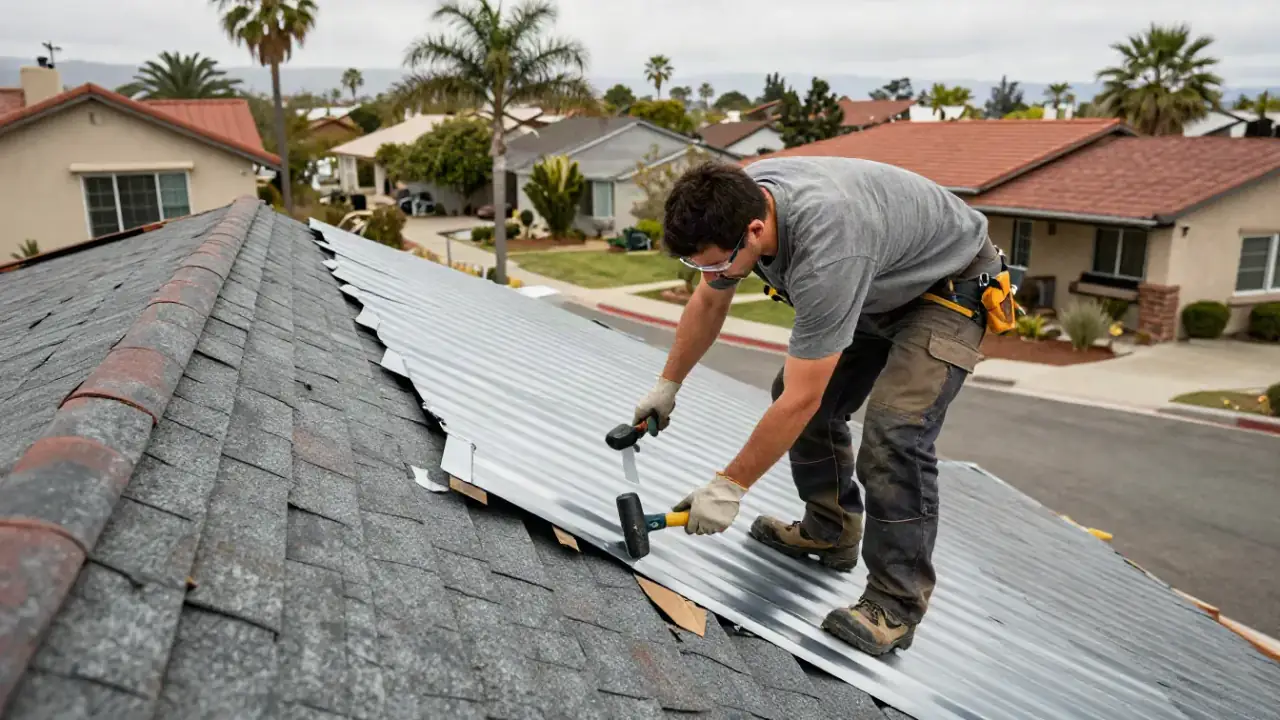 Flashing RepairFlashing failure is one of the top sources we confirm during a moisture investigation. We reshape and reseal counter-flashing at walls and chimneys with a flashing bender and Sika sealant so the entry point stays closed.Explore →
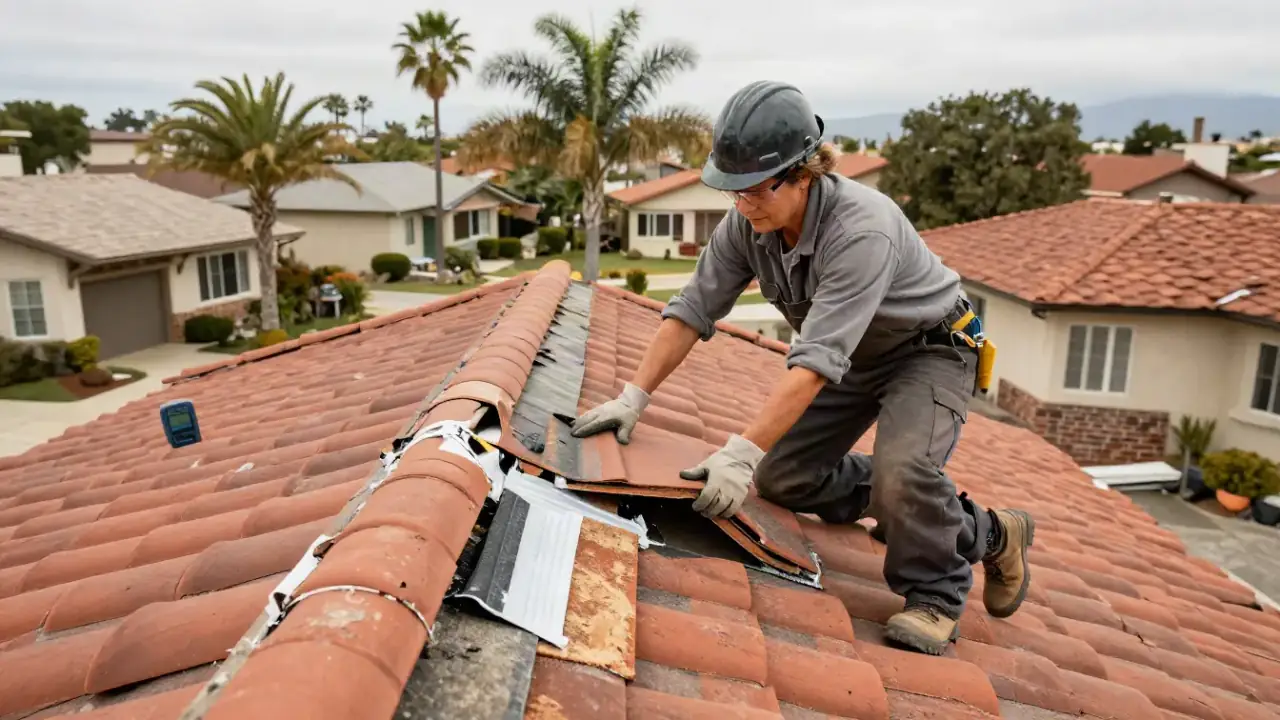 Skylight Leak RepairA skylight seal kit and fresh curb flashing stop the drip that shows up as a ceiling stain. We test the seal with a hose before we leave, so the repair is confirmed, not assumed.Explore →
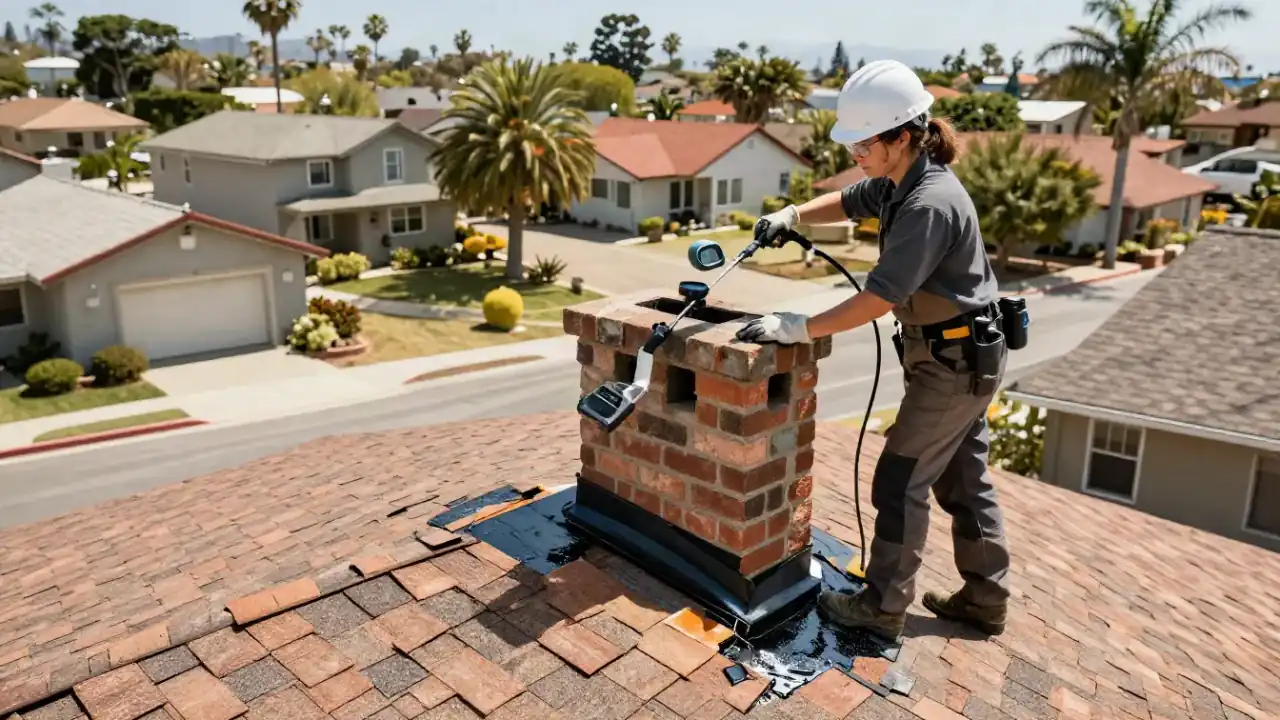 Chimney Leak RepairChimney leaks send water sideways along the framing, which is why the stain appears far from the chimney. We trace it with a moisture meter, then rebuild the counter-flashing and seal the masonry joint.Explore →
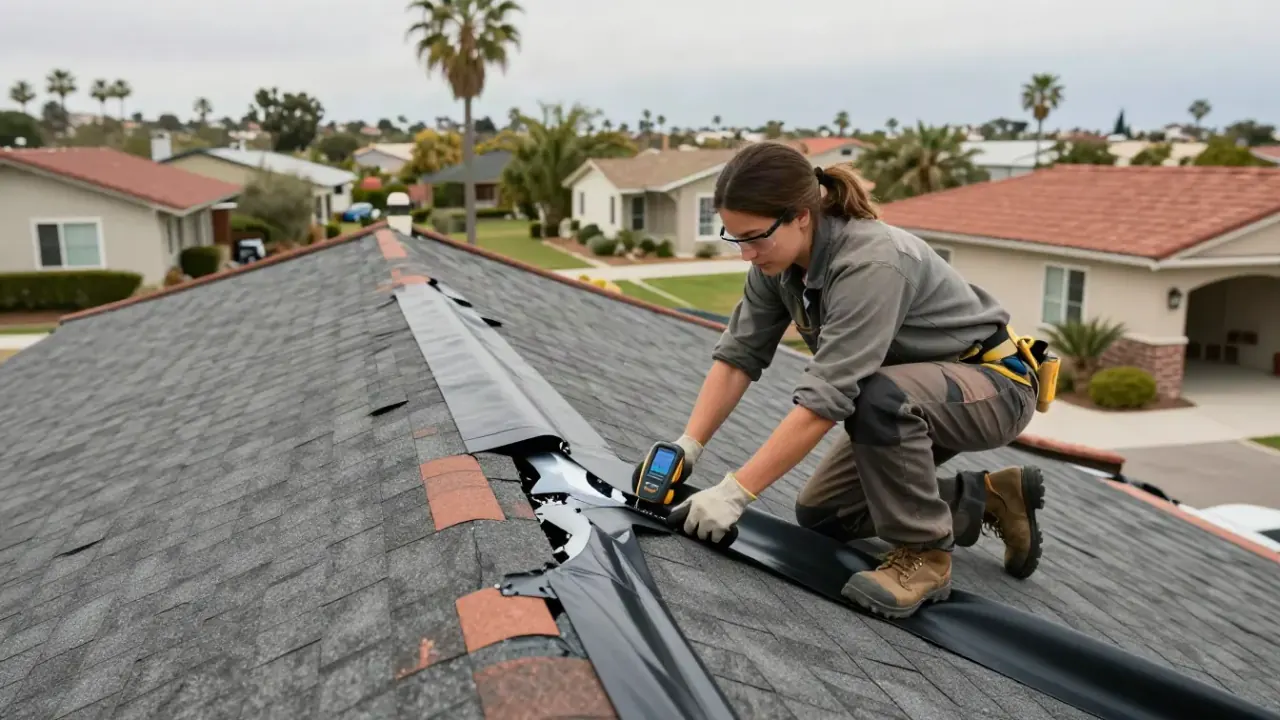 Valley Leak RepairValley leaks are common on Whittier tile roofs after heavy rain. We clear debris, check the valley metal, and replace failed underlayment so water follows the valley instead of entering the attic.Explore →
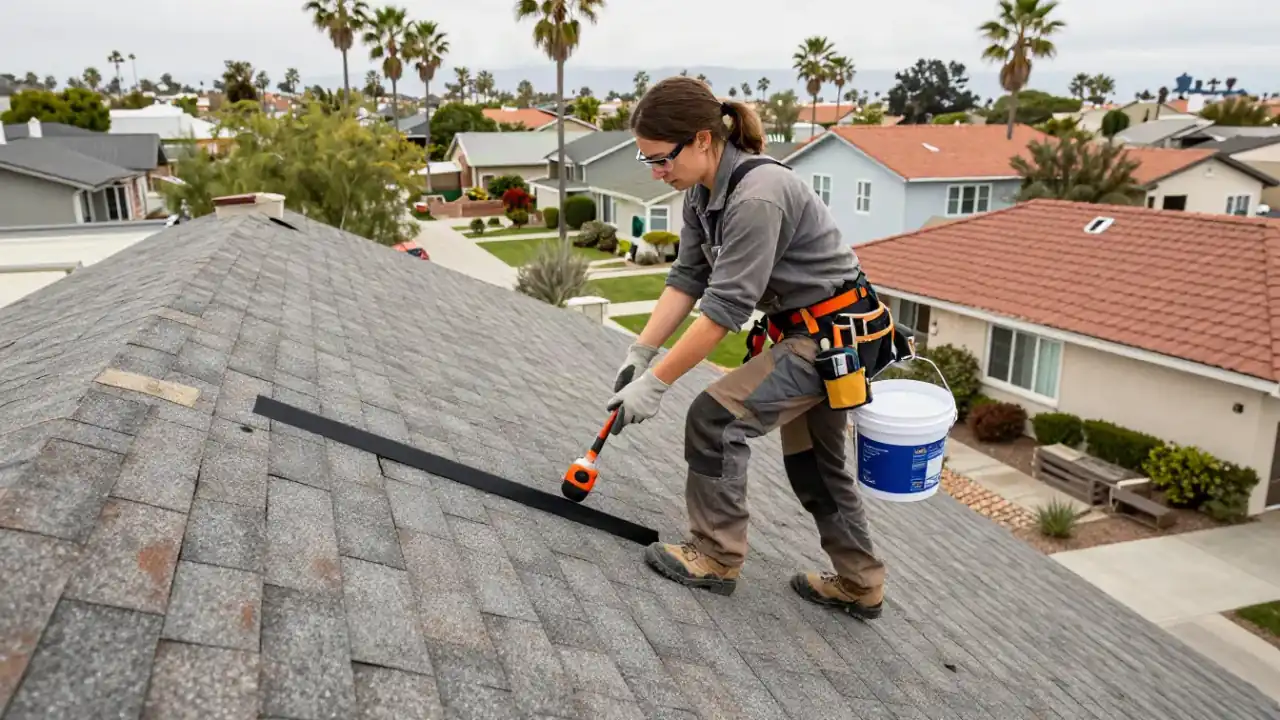 Vent and Pipe Boot Leak RepairPipe boot leak is the single most common finding in our investigations. The rubber collar cracks after years of sun, and water runs straight down the pipe. We replace the boot and seal it with roof cement.Explore →
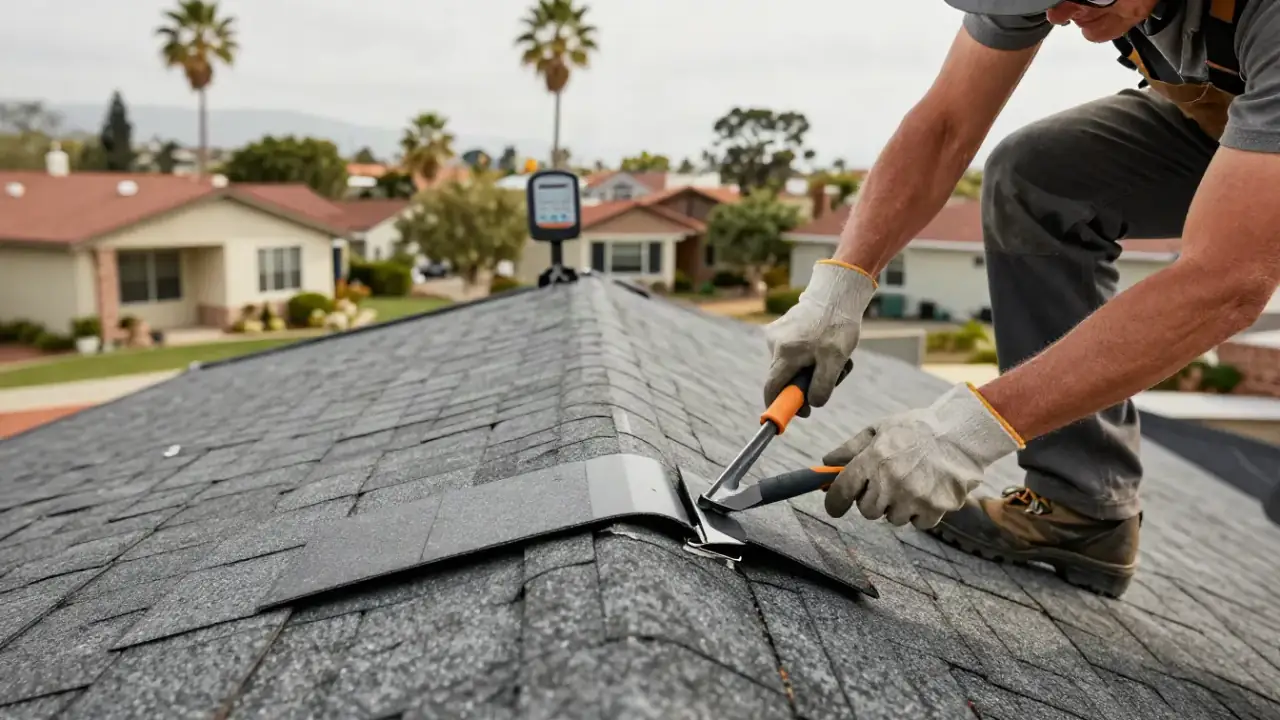 Flat Roof RepairFlat roof ponding pushes water under seams and around drains. We locate the low spots, repair the membrane, and apply roof coating to restore drainage before the next storm season.Explore →
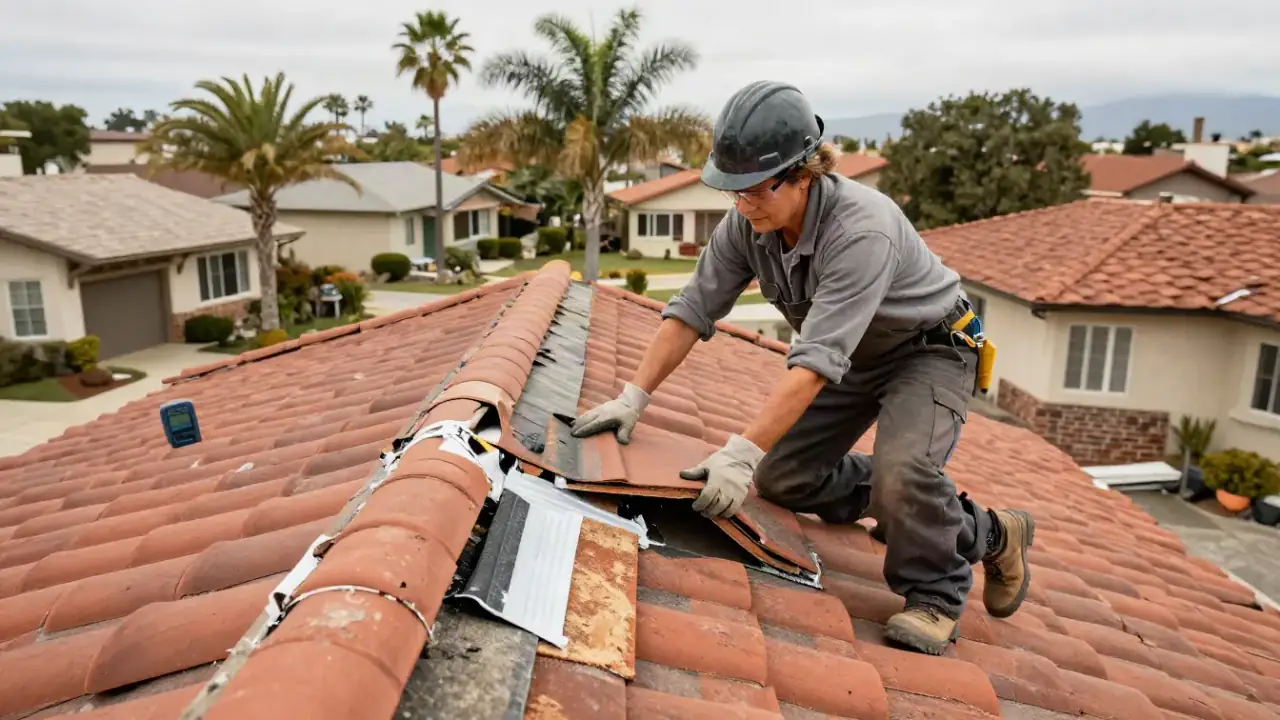 Tile Roof RepairTile underlayment failure is invisible from the ground. We lift the tile, inspect the underlayment, and replace the failed section without breaking surrounding tiles.Explore →
 Shingle RepairShingle damage from wind and sun opens a path for water. We match GAF, Owens Corning, or CertainTeed shingles to your existing roof and seal the repair so it blends and performs.Explore →
One call gets a licensed, insured technician on your roof with a moisture meter and thermal camera. We answer 24/7 for active leaks. Call (562) 443-3829 and we will find the source today.
Schedule Inspection (562) 443-3829 →Call us at (562) 443-3829 or send an email and we will get back to you the same day. We book same-day appointments across Whittier and answer emergency calls 24/7 when a storm is pushing water into your home. Tell us what you are seeing and we will tell you what it likely is.